Insights & innovations from Cogitate Learning
Welcome to my blog and news page. Here I share my thoughts, discoveries, and reflections on education, technology, artificial intelligence, and creative, future-leaning approaches to teaching and learning. I am especially interested in practical ideas and meaningful tools that can help educators save time, engage students, and create stronger learning experiences.
What I've Been Doing
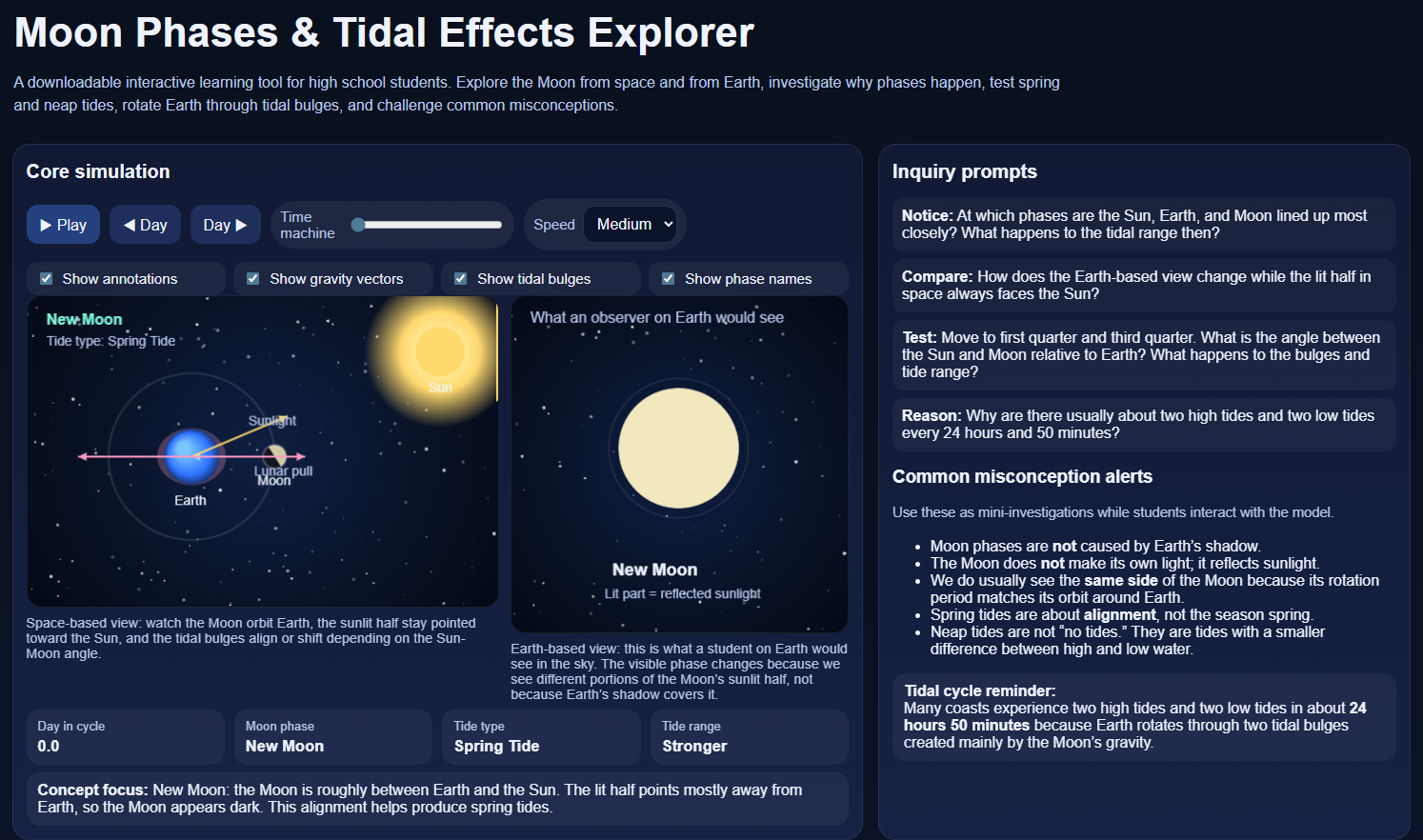
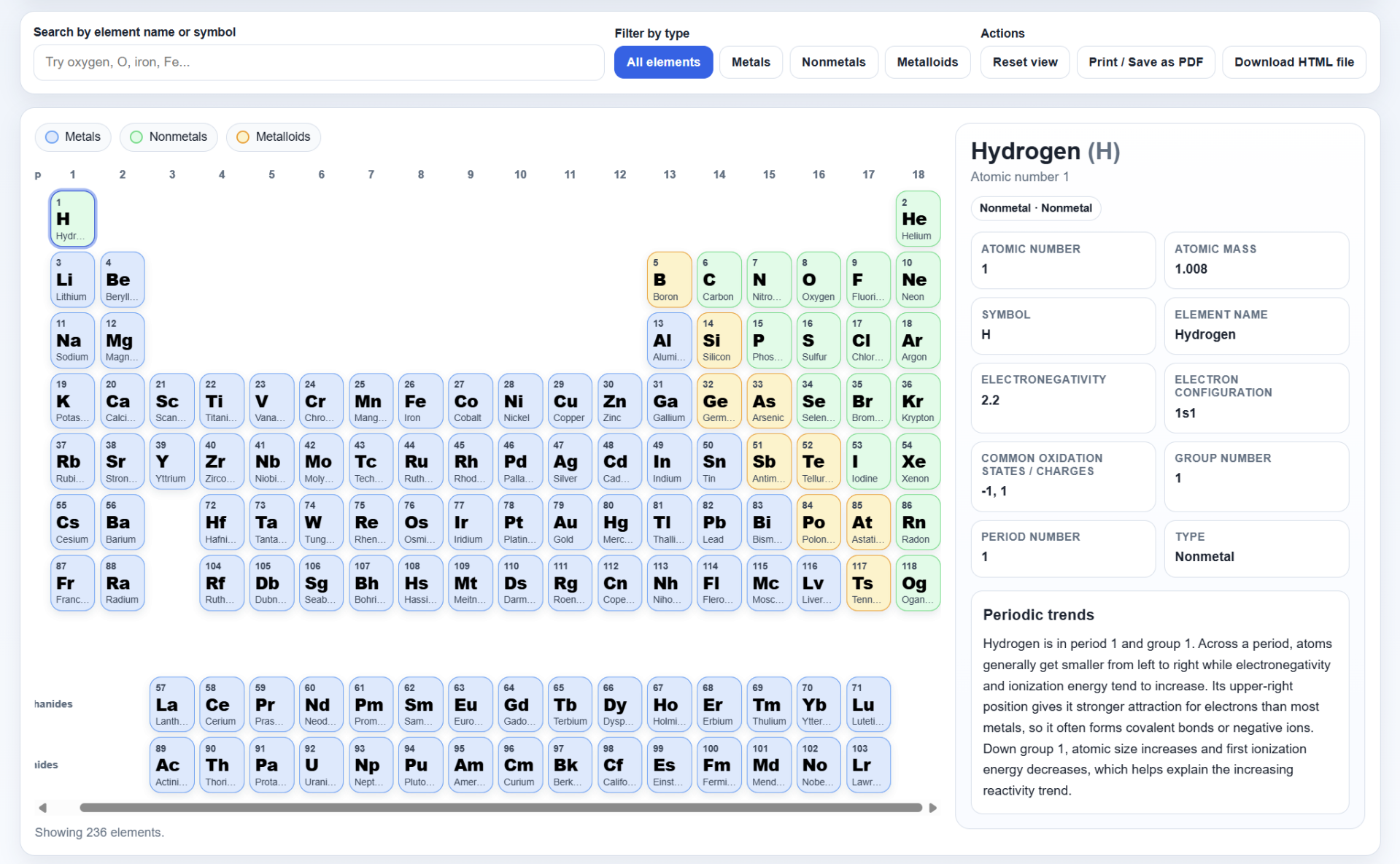
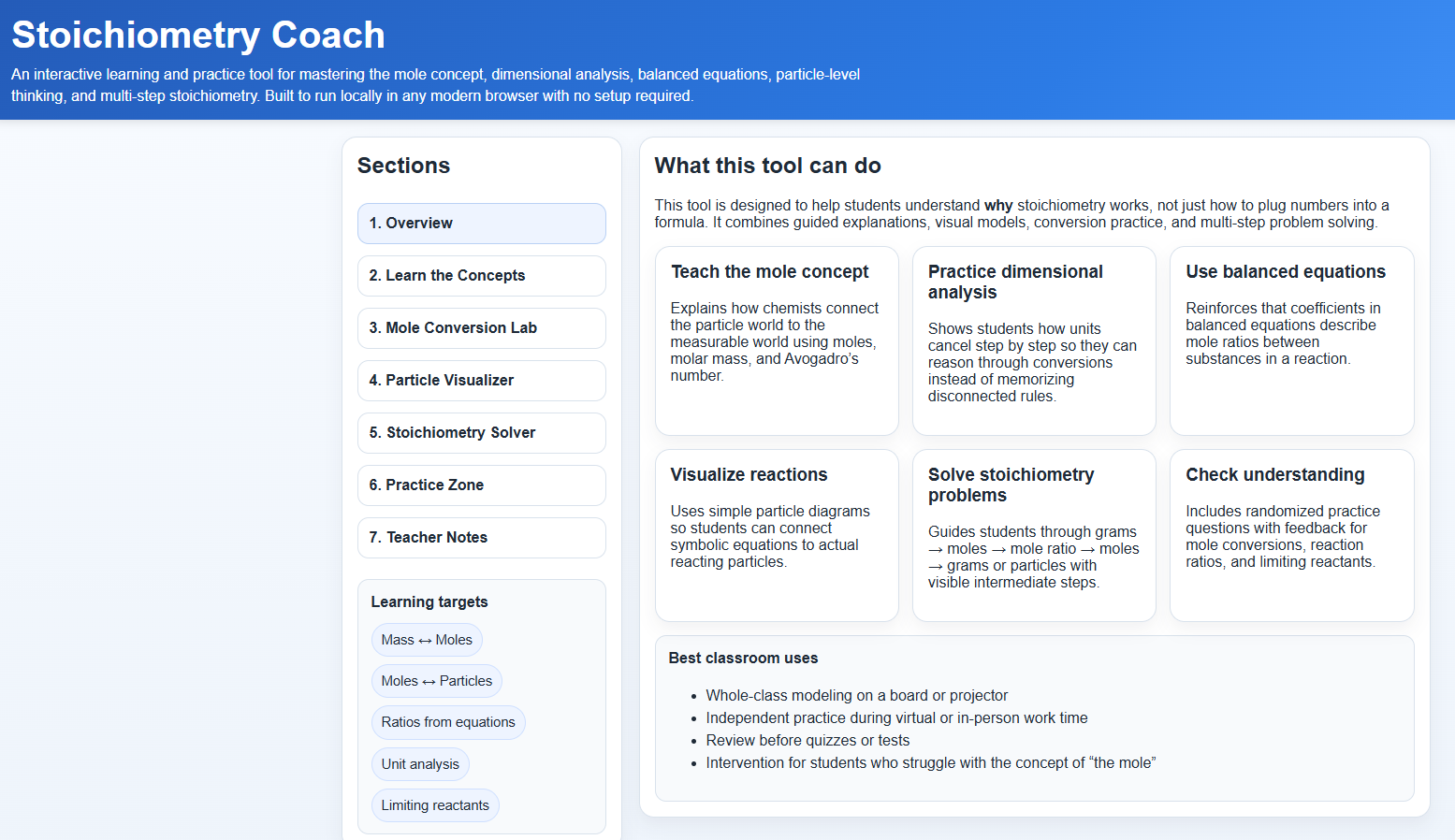
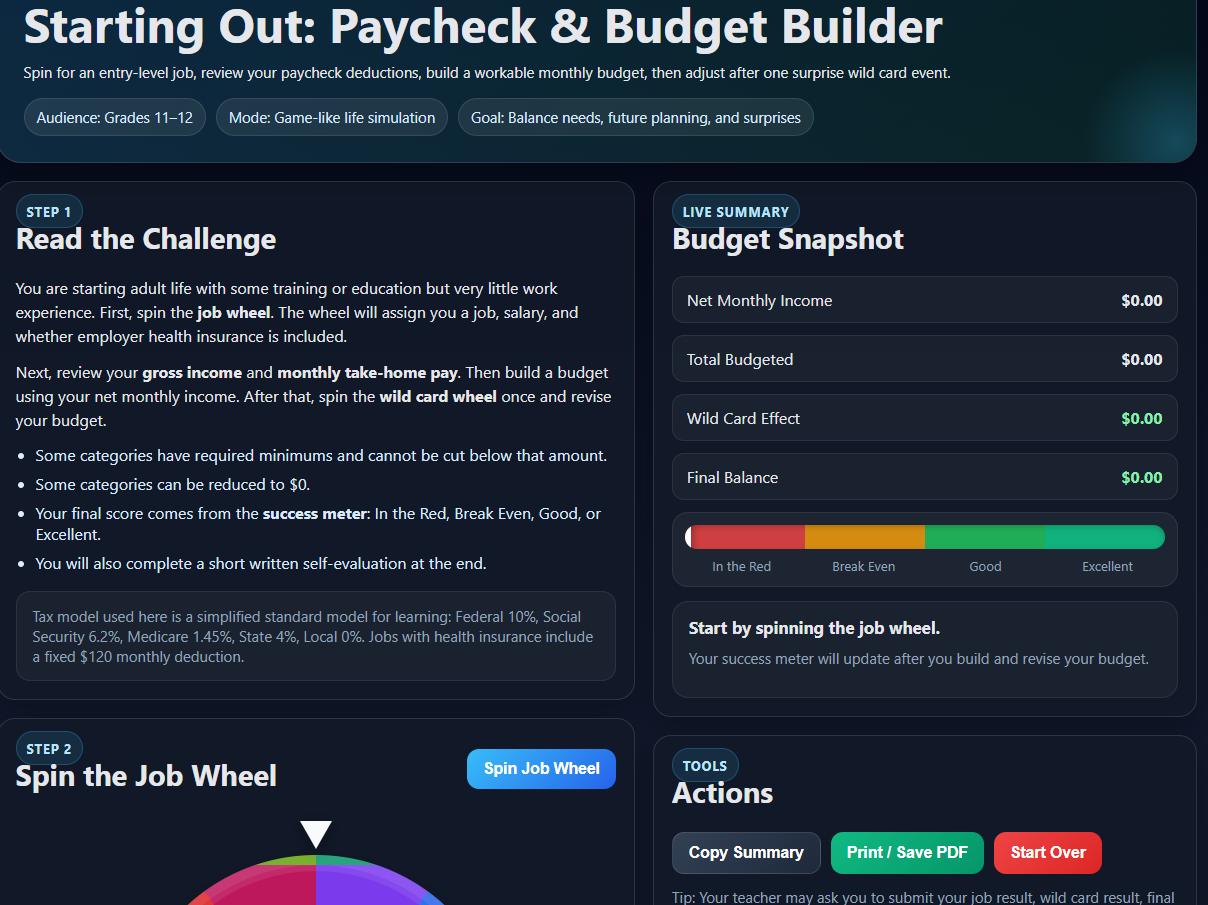
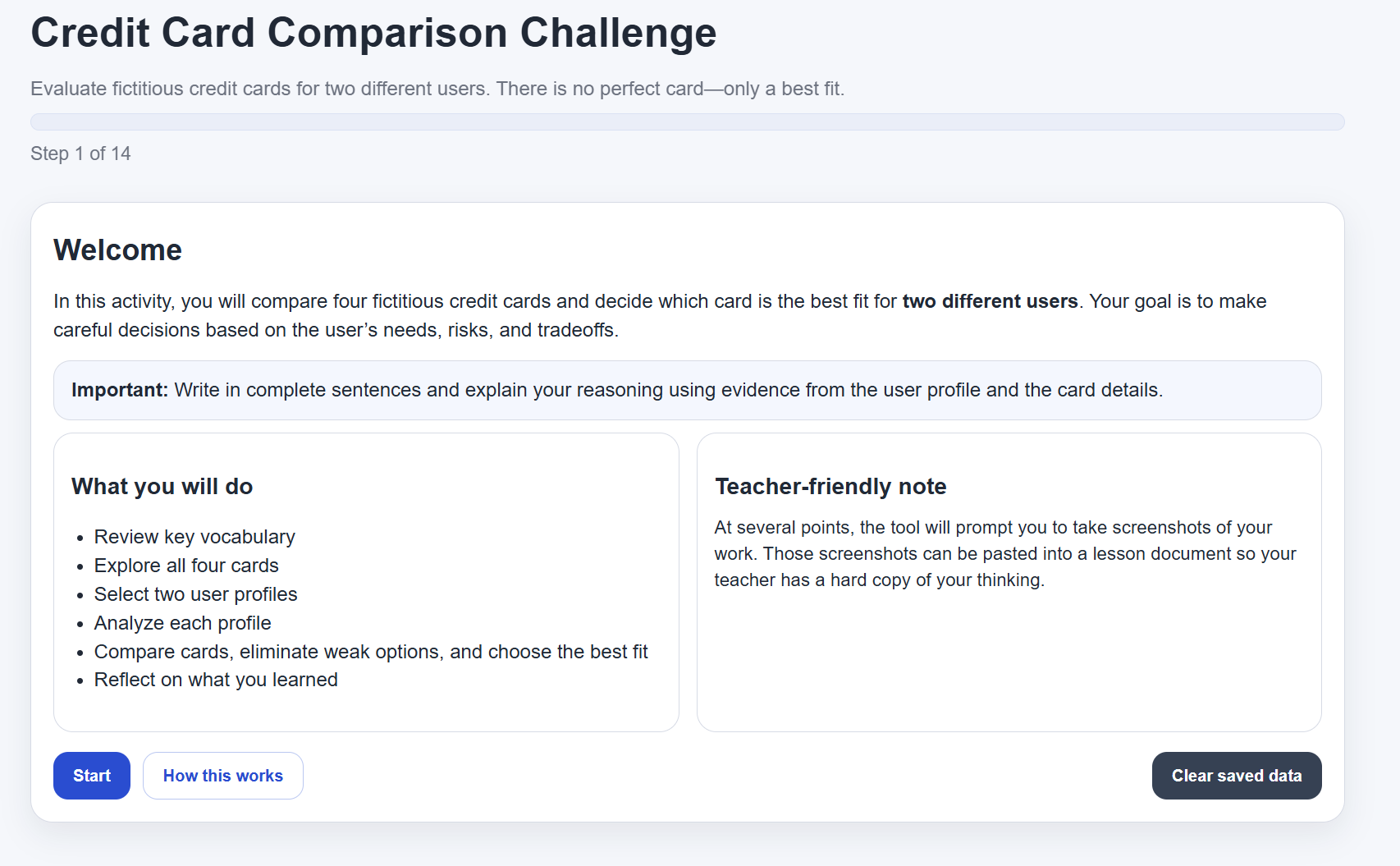
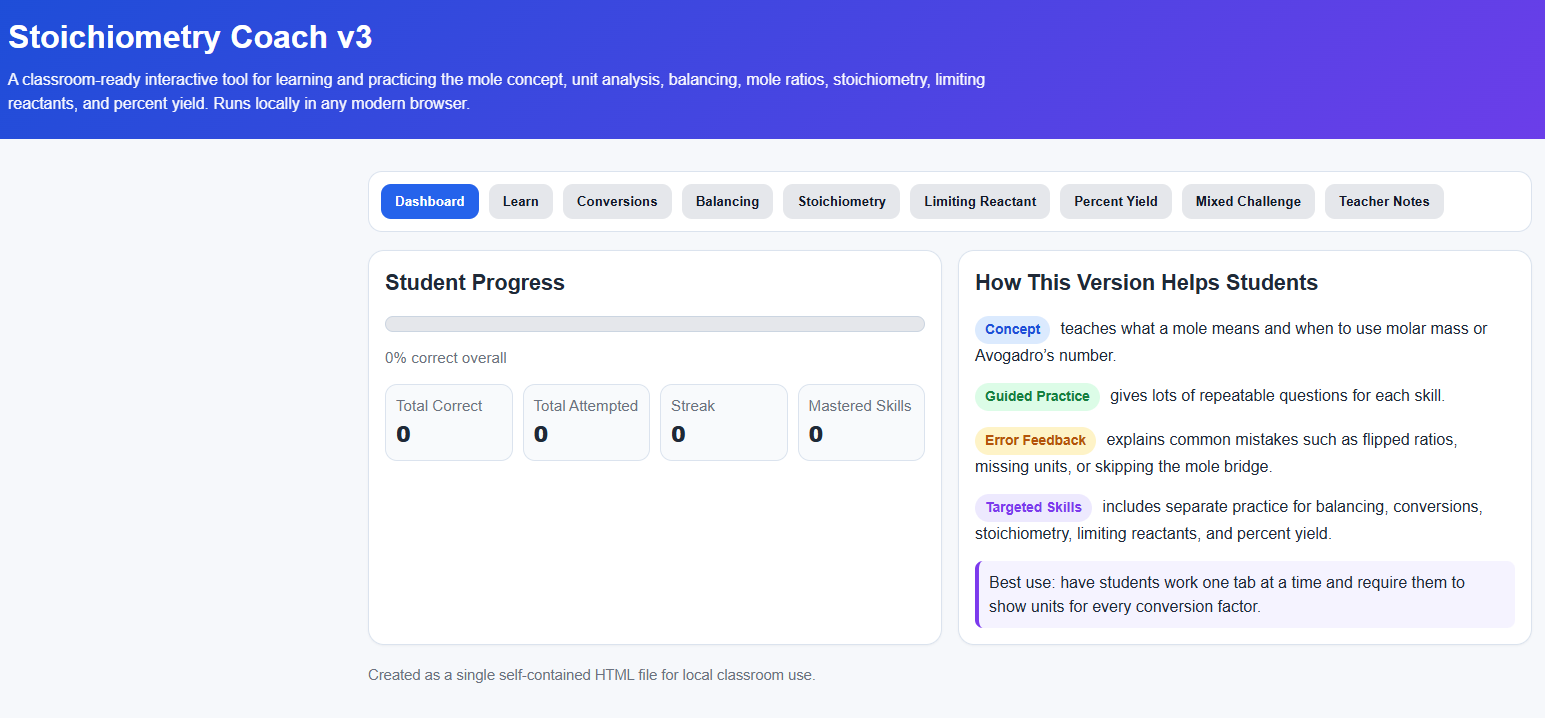
Over the past several months, I have been exploring what becomes possible when a teacher works collaboratively with artificial intelligence to design interactive learning tools. Rather than using AI to replace teaching, I have been using it as a creative partner to help imagine, build, refine, and test educational resources that are more visual, more engaging, and more responsive to student needs. Together, we have developed interactive tools in subjects such as science and personal finance that are designed to help students explore concepts actively rather than passively receiving information.
This work matters because many students learn best when they can manipulate ideas, test outcomes, visualize processes, and receive immediate feedback. Traditional worksheets and static presentations still have value, but they do not always give students the kind of dynamic learning experience that leads to deeper understanding. By using AI to help create interactive tools, I have been able to move beyond the limits of more conventional materials and explore new ways to make learning clearer, more accessible, and more meaningful.
What excites me most is that this process shows how teachers can use AI thoughtfully and creatively in service of real educational goals. A teacher brings the instructional vision, subject knowledge, and understanding of students. AI can then help accelerate the design and development process, making it more possible for educators to create customized resources that once would have required advanced technical skills or a great deal of time. In that sense, this work is not just about the tools themselves. It is about demonstrating a new model of educational design in which teachers can shape the future of learning more directly.
What I'm Reading in May
U.S. Schools Face a Crisis as the Number of Children Drops
Declining enrollment has hit many of the nation’s largest urban school districts, including Los Angeles, Chicago and New York, a New York Times analysis found. But smaller and suburban districts are shrinking at a similar rate.
Fewer students means less funding, which is tied to enrollment numbers. Many districts are now facing painful budget cuts — and heated conversations about whether to close schools.
Mervosh, S., Paris, F., & Miller, C. C. (2026, May 8). U.S. schools face a crisis as the number of children drops. The New York Times. https://www.nytimes.com/2026/05/08/upshot/public-schools-enrollment-crisis.html
The Academy Rethinks the SAT
As a teacher, I believe students deserve honest feedback about what they know, what they can do, and where they still need support. Grades should reflect demonstrated skills and learning, not pressure from politics, parents, institutions, or fear that academic honesty might harm a student’s self-image.
The problem is larger than the SAT or ACT. Standardized tests are imperfect, but so are grades, essays, recommendations, and extracurricular profiles. In an era of grade inflation and AI-assisted application materials, schools and colleges need multiple reliable ways to understand whether students are truly prepared for the work ahead.
When we hide preparation gaps, we do not remove barriers. We move them further down the road, where they become harder and more painful for students to overcome. That is not equity. Real equity means making sure all students have access to strong instruction, rigorous curriculum, well-prepared teachers, meaningful support, and honest assessment.
We also need to keep partisan politics from weakening curriculum or lowering expectations. Students across the country deserve schools that are well-funded, academically serious, and held to high standards. Teacher preparation and professional development should also be rigorous and consistent.
Students are capable of growth, but they cannot grow from feedback they never receive. If we want students to succeed in college, careers, and civic life, we need the courage to tell the truth about readiness and then provide the support needed to help them meet high expectations.
The Editorial Board. (2026, May 28). The academy rethinks the SAT. The Wall Street Journal. https://www.wsj.com/opinion/university-of-california-sat-act-math-stem-professors-06dd0f6d
This big university system is embracing AI. Students and faculty aren't all on board
I support California State University’s decision to take AI literacy seriously and prepare students for the workforce they are entering.
That does not mean every concern about AI should be dismissed. Students and faculty are right to raise questions about overreliance, accuracy, creativity, job security, environmental impact, copyright, and academic integrity. These concerns matter, and they should be part of the conversation.
But I do not think pretending AI can be kept out of education is a realistic or responsible path forward. Students are already using AI tools, and many will be expected to use them in future careers. The better question is how educators can help students use AI thoughtfully, ethically, and skillfully.
To me, the goal should not be to let AI replace student thinking. The goal should be to teach students when AI is useful, when it is risky, how to check its output, how to protect their own voice and creativity, and how to use it as a tool rather than a shortcut.
CSU’s approach is not perfect, and it deserves careful oversight. But I agree with the broader direction: AI literacy is becoming part of career readiness, and schools have a responsibility to help students understand the technology that will shape their academic, professional, and civic lives.
As educators, we cannot simply say AI is not our problem. It is challenging, but meeting difficult changes in teaching and learning is part of the work.
Gaines, L. V. (2026, May 25). This big university system is embracing AI. Students and faculty aren’t all on board. NPR. https://www.npr.org/2026/05/25/nx-s1-5772820/artificial-intelligence-education-technology-california-state-university
There’s Never Been a Better Time to Study Computer Science
This article discusses what is happening across education more broadly. AI is not simply eliminating the need to learn; it is changing what students need to learn. Students still need foundational knowledge, but they also need to understand how to use AI tools thoughtfully, ethically, and effectively.
For educators, the challenge is not to ignore AI or retreat from it, but to rethink instruction so students develop both core understanding and practical AI literacy. The future may not belong to students who can simply write code by hand, or to those who rely entirely on AI. It will likely belong to those who understand enough to ask better questions, evaluate AI-generated work, solve problems creatively, and use technology responsibly.
Shroff, L. (2026, May 23). There’s never been a better time to study computer science. The Atlantic. https://www.theatlantic.com/technology/2026/05/computer-science-major-coding-ai/687279/
More Schools Are Providing AI Training for Teachers. Is It Any Good?
AI professional development for teachers is increasing, and that is encouraging. According to EdWeek Research Center data, the percentage of teachers reporting no training in generative AI has dropped from 58% in 2024 to 42% in 2026. That is real progress.
But the larger question is not simply whether schools are offering AI training. The more important question is whether the training is deep enough to help teachers use AI thoughtfully for teaching and learning.
Introductory sessions on using AI to draft emails, brainstorm lesson ideas, or save time are helpful, but they are only the beginning. Teachers also need guidance on how AI can support differentiation, student feedback, process-based assessment, critical thinking, accessibility, and ethical classroom use.
Just as important, schools need clear AI policies and expectations. Teachers cannot be expected to lead students through this rapidly changing landscape if they are left unsure about what is allowed, what is appropriate, and what good AI use actually looks like.
AI is already part of students’ lives. The challenge for education is not to pretend it is going away, but to help teachers and students use it responsibly, reflectively, and in ways that genuinely support learning.
Heubeck, E. (2026, May 18). More schools are providing AI training for teachers. Is it any good? Education Week. https://www.edweek.org/technology/more-schools-are-providing-ai-training-for-teachers-is-it-any-good/2026/05
OpenAI and Khan Academy Made a Chatbot. What Can We Learn?
I think Sal Khan’s basic instinct was right: AI will become part of education, and responsible educators need to shape it rather than ignore it. But the article shows that the phrase “every student gets a tutor” was too optimistic if people interpreted it to mean every student would suddenly have the equivalent of a wise, patient, accurate, emotionally aware human tutor.
What went wrong was not one single failure. It was a collision between a powerful but unstable technology and the messy realities of learning: student motivation, teacher oversight, safety, cost, accuracy, curriculum sensitivity, and trust.
Tyrangiel, J. (2026, May 16). OpenAI and Khan Academy made a chatbot. What can we learn? The New York Times. https://www.nytimes.com/2026/05/16/business/tyrangiel-ai-book-openai-khan-academy-khanmigo.html
‘A’ Grades Are Suddenly Everywhere Since the Arrival of ChatGPT
I am deeply interested in the role of AI in education. I believe one of the most important things we can do is teach people how to work with AI as a partner while still preserving the essential role of human judgment, creativity, and responsibility.
It is entirely possible to design engaging, challenging instruction that asks students to use AI and other tools to support discovery, deepen understanding, and synthesize new ideas. But if we cling to instructional models created for a time when AI and digital technologies were not part of everyday life, and simply try to force those models to fit the world students now inhabit, we will continue to fall short.
Education has to evolve with the world around it. Our goal should not be to compete with AI or ignore it, but to help students become thoughtful, ethical, and capable human partners in an AI-rich world.
Ellis, L. (2026, May 13). ‘A’ grades are suddenly everywhere since the arrival of ChatGPT. The Wall Street Journal. https://www.wsj.com/us-news/education/a-grades-are-suddenly-everywhere-since-the-arrival-of-chatgpt-845baae7
OPINION: Three-year degrees may become a viable option in the U.S., but questions about their value remain
Three-year bachelor’s degrees are moving from idea to reality. In Massachusetts, the board of higher education announced in February that it would begin accepting pilot proposals for these shortened degree programs.
Elsewhere in the United States, at least one college is expanding three-year degree options across all majors, and more graduate admissions leaders seem willing to consider applicants who completed 90-credit bachelor’s programs instead of the traditional 120-credit path.
As college costs continue to rise, the three-year degree has emerged as one possible way to reduce both the time and expense of earning a bachelor’s degree. For many students, this could be a meaningful benefit. However, the long-term value of these programs will depend on how they are received beyond college itself. If three-year degrees become more common in the U.S., their success will likely be measured by whether graduate schools, employers, and other selection committees treat them as equal to traditional four-year degrees.
Anderson, J. (2026, May 11). Three-year degrees may become a viable option in the U.S., but questions about their value remain. The Hechinger Report. https://hechingerreport.org/opinion-three-year-degrees/
OPINION: In the rush to adopt new AI technologies, let us not forget about the human touch
The author writes, "Artificial intelligence and evolving technologies can absolutely advance our capacity to collaborate, problem-solve and think critically — if we make it so. But we cannot ever forget that it’s ultimately the human experiences we share that are the most important part of the learning that we do."
Delizo-Osborne, J. (2026, May 7). In the rush to adopt new AI technologies, let us not forget about the human touch. The Hechinger Report. https://hechingerreport.org/opinion-in-the-rush-to-adopt-new-ai-technologies-let-us-not-forget-about-the-human-touch/
Why Sal Khan’s AI revolution hasn’t happened yet, according to Sal Khan
The article argues that Sal Khan’s original vision of AI as a transformational personal tutor for every student has not yet materialized because many students simply do not use AI tutoring tools like Khanmigo in meaningful ways. Khan and other educators interviewed acknowledge that while the chatbot can be supportive and useful in some cases, many students struggle to ask good questions, lose interest, or use AI mainly to get answers rather than deepen learning. The piece suggests that AI in education has clear limits when used as a stand-alone solution and that its greatest value may come when it is integrated into broader instructional systems led by teachers, rather than treated as a revolutionary replacement for human support.
Barnum, M. (2026, April 9). Why Sal Khan’s AI revolution hasn’t happened yet, according to Sal Khan. Chalkbeat. https://www.chalkbeat.org/2026/04/09/sal-khan-reflects-on-ai-in-schools-and-khanmigo/
As AI Pushes Students to Reconsider Majors, Universities Struggle to Adapt
This article examines how AI is beginning to reshape higher education by affecting the majors students choose and raising concerns about future careers, especially entry-level jobs. Its main focus is the growing gap between how quickly AI is changing the workforce and how slowly many colleges and universities are responding.
It's my opinion that education should be leading this moment, not lagging behind it. Students are entering a world increasingly shaped by artificial intelligence, yet education remains slow to adapt. It is striking that companies such as Google, OpenAI, and Anthropic are offering free AI learning opportunities while many state education departments still do not appear to have clear, actionable plans to help schools prepare students for this new reality.
Cochran, L. L. (2026, April 12). As AI pushes students to reconsider majors, universities struggle to adapt. The Hill. https://thehill.com/homenews/education/5826091-ai-college-majors-job-market/
Education’s AI Reckoning Is Here. Who’s In Charge?
Ann Kirschner’s Forbes article, “Education’s AI Reckoning Is Here. Who’s In Charge?” argues that education has reached a turning point with artificial intelligence. The issue is no longer whether AI will transform schools and universities, but whether educational leaders will actively guide that transformation or be passively shaped by it. One of the article’s strongest arguments is that institutions should stop treating AI primarily as a cheating concern and instead recognize it as a major shift in how students learn, work, and prepare for the future. Kirschner also emphasizes that teachers remain education’s most important asset because AI cannot replace the knowledge, judgment, motivation, and human connection that strong teaching provides. Finally, the article suggests that AI may actually increase the importance of the liberal arts, humanities, and other fields that develop critical thinking, communication, ethical reasoning, and creativity. Overall, the article presents AI not simply as a threat to manage, but as an opportunity for education to rethink its purpose and better prepare students for the world ahead.
Kirschner, A. (2026, April 12). Education’s AI reckoning is here. Who’s in charge? Forbes. https://www.forbes.com/sites/annkirschner/2026/04/12/educations-ai-reckoning-is-here-whos-in-charge/